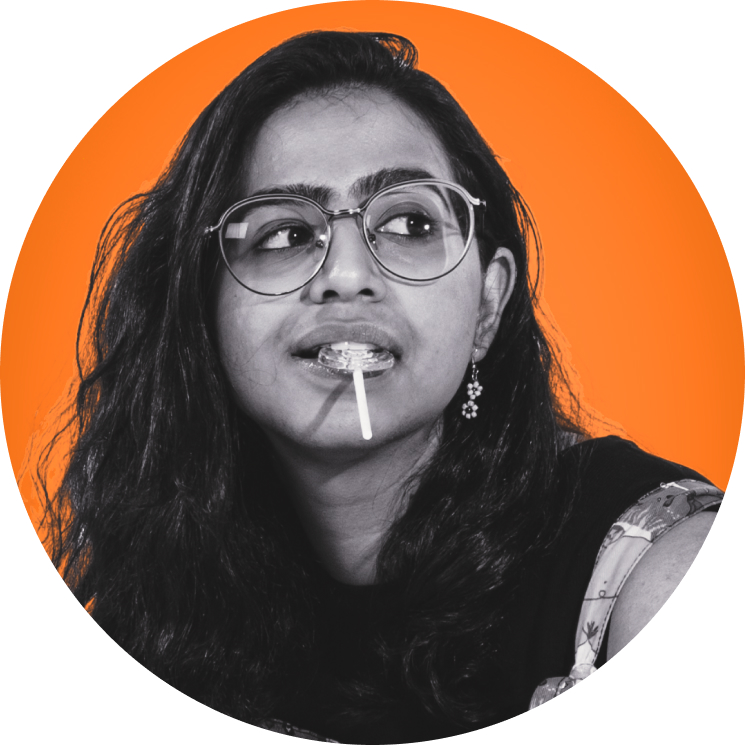


Hamja is best known for the book Shy Radicals: Antisystemic Politics of the Militant Introvert, recently made into a film, that envisions a utopic homeland for quiet, awkward and neurodiverse people. He was awarded the Grand Prize at Ljubljana Biennial 2019 for the artwork Aspergistan Referendum, based on this book. His art practice weaves inside and outside the artworld, progressive movements, and Muslim diasporic spaces, in the form of speaker tours, coining critical languages, zine fairs, building archives and collections, and creating exhibition spaces. He recently curated Zine Mela, the South Asian DIY Cultures festival and archive.
1. Tell us about your background; what inspired you to start your creative journey?
That question is always enormous because it makes you think back through your whole life.
Creatively, it probably began when I was very young, like maybe three or four. I remember drawing constantly. Even in nursery, I was always sketching in the margins, and teachers quickly labelled me as the “artistic” child, and that identity stuck with me.
In terms of writing, I’m probably best known for Shy Radicals, but the ideas behind it go back to childhood as well. I experienced bullying and alienation quite early on, and I was always very aware of the power structures that exist even in small environments like classrooms. You notice how popularity works, how authority works, how people organise themselves socially.
My parents were born in Bengal pre-independence and migrated to the UK in the 1960s. They weren’t especially involved in literature or the arts (my father has a very practical, accountant-like personality), but my mum did introduce me to Bengali cinema when I was young. I remember watching Pather Panchali and other films by Satyajit Ray with her as a child. Those early visual experiences probably shaped my imagination more than I realised at the time.
The environment I grew up in greatly influenced the work I would eventually start making. I’ve spent most of my life in South London, like Tooting and Mitcham. These are incredibly layered migrant spaces, and the neighbourhoods, their histories, their food culture and their communities are all parts of who I am and the work I make.
2. Your book Shy Radicals has developed a real following. Where did the idea come from?
It came from trying to think differently about activism.
Many political movements are built around extroversion, such as public speaking, confrontation, large demonstrations, and highly visible forms of participation. However, not everyone experiences the world in that way.
So I started wondering what a political movement might look like if it centred on introverts instead.
That’s where the idea for Shy Radicals came from. The book imagines a fictional state called Aspergistan, which is essentially a homeland for shy and neurodivergent people. It draws on the parts of partition history and geography, as well as revolutionary movements like the Black Panthers, but it reframes that language and that political energy for people who might not naturally fit into loud activist spaces.
In some ways, it’s satire, but it’s also quite sincere. It’s asking what would happen if quiet people were the ones designing society.

3. The book blends fiction, manifestos, constitutions and political writing. What did your research process look like?
My research process is quite eclectic.
For example, the first chapter is written as a constitution, so I spent time reading different constitutions from around the world. The Cuban constitution, in particular, struck me as surprisingly poetic. Legal language can sometimes have a rhythm to it that people don’t normally notice.
I also read revolutionary texts and prison interviews—things like conversations with Assata Shakur and Mumia Abu-Jamal. The powerful, often rhythmic rhetoric of movements like the Black Panthers had a big influence on the tone of the book.
Another key thing was that my brother was detained without trial for 6 1/2 years for the war on terror. The campaign I ran for him for years taught me to read legal texts and parse out the pain and soul in them. This got me shortlisted for the Liberty Award, but it also changed my creative process, just living under the war on terror, rampant Islamophobia.
But at the same time, I did more unexpected research too. I watched a lot of teen films (eg, Mean Girls, Winona Ryder films) because they also show very clear social hierarchies.
So you end up with this strange combination in which the vocabulary of teenage popularity and school politics is inserted into revolutionary constitutional language. That’s why in Shy Radicals you’ll see references to “popular girls” appearing inside political structures.
4. Something that really resonated with me while reading Shy Radicals was the idea that activism often feels built for extroverts. What advice would you give introverts who want to get involved?
I’m not sure I’m the best person to advise on this, since I’m still figuring these things out myself.
But what I’ve noticed is that communities tend to form naturally around shared experiences. One of the surprising things about Shy Radicals is that it generated networks and projects that I didn’t organise at all.
There were exhibitions, collectives, research groups, and even academic projects inspired by the book. People created those things themselves because they connected with the ideas.
So I think activism doesn’t always have to begin with big organisations or formal structures. Sometimes it starts with smaller connections, close friendships, mini conversations, and shared frustrations.
Quiet people often find each other eventually (and silently!).
5. You’ve been part of zine culture since the early 1990s. How has the scene changed?
When I first started making zines in the early 1990s, everything was very analogue. Photocopiers were central to the whole culture. I made my first zine in 1994, called Nausea. I was very much into the alternative music press at the time, being very struck by Kurt Cobain's suicide.
When I returned to the scene more actively around 2009 with a series of collective zines on Jinnah, I noticed something interesting; despite being hosted in diverse, migrant neighbourhoods, the zine scene in the UK was still quite white-dominated.
That was one of the motivations behind DIY Cultures, the festival I helped organise between 2013 and 2017. We wanted to open the scene up and connect it with zine cultures from around the world, including Malaysia, Tanzania, South Asia, and beyond.
Since then, the scene has grown enormously. Zine culture is probably bigger now than it has ever been.
But what matters to me most isn’t the commercial side. Zines are really about community, connection and experimentation.

6. That brings us to Zine Mela. What inspired you to create it?
The idea came from seeing other diaspora-focused events.
I was really inspired by the London Spanish Book and Zine Fair, which highlighted Latin American creators and opened up new cultural networks. I was very impressed by how they reopened geographies and highlighted other communities and language orientations. I met several zine makers from Argentina, Mexico and Chile, and through that, I was able to get Shy Radicals translated into Spanish.
I also saw similar events organised by friends connected to Hong Kong and Chinese diaspora communities, like Small Tune Press.
Seeing those made me wonder why there wasn’t something similar focused on South Asia.
The word mela was important as well. A mela isn’t just a festival; it’s a gathering, something social and community-oriented.
I wanted the event to feel less like a formal, commercial art fair and more like a space where people could spend time together.

7. The atmosphere at Zine Mela felt very different from other zine events.
That was very intentional.
Most zine fairs operate like markets. People buy and sell things.
I wanted to create something slower and more reflective. We had a reading room where visitors took their shoes off and sat on the floor, surrounded by zines from around the world. People could add their own zines to the archive, or even create new ones while they were there.
We also had carrom boards and communal spaces for food and conversation. The idea was to create a space where people could actually connect rather than just move through the event quickly.

8. What changes would you like to see in the South Asian creative community?
I think one thing I’d love to see is more connection between different communities.
South Asia is incredibly diverse, but sometimes our cultural spaces remain quite fragmented, with our diverse languages, regions, and diasporas operating separately. I realised in the process of organising Zine Mela how much our common vocabulary is quite limited to ourselves, and we take this for granted. We stay separated in our local sectors and industries, and very rarely do we come by and support each other.
One of my favourite moments at Zine Mela was seeing three generations of the same family together: a grandmother, her daughter, and her granddaughter.
That kind of cross-generational space is very powerful and enables so much sharing of information and culture.
I’d also like to see stronger support structures for artists. Things like universal basic income for creatives, affordable studio spaces and more sustainable cultural ecosystems.
Art shouldn’t just be treated as a luxury or an afterthought. It’s part of the social fabric that helps communities thrive.

9. What’s coming up next for you?
Right now, I’m working on a second book called Radical Chicken.
It grows out of an art project I’ve been developing around fried chicken culture and diaspora. It’s an extension of some work I showed at Documenta 15 in Germany, where I created fictional fried-chicken chains tied to political movements, such as Popular Front for the Liberation of Fried Chicken and Fanon Fried Chicken, and I sort of integrated and assimilated this throughout the city.
I’m also preparing the next edition of Zine Mela, which I hope will take place next year.
At the moment, I’m thinking about how it might evolve, maybe becoming something more dispersed, with smaller events and archives throughout the year rather than just one big gathering.
10. Finally, the most important question: what is your favourite South Asian sweet?
Gulab jamun.
Partly because I look like one.
I used to have an auntie who was darker-skinned than the others, and we used to call her kala jamun, very affectionately, because she was sweet and everyone loved her.
So yes, gulab jamun.