
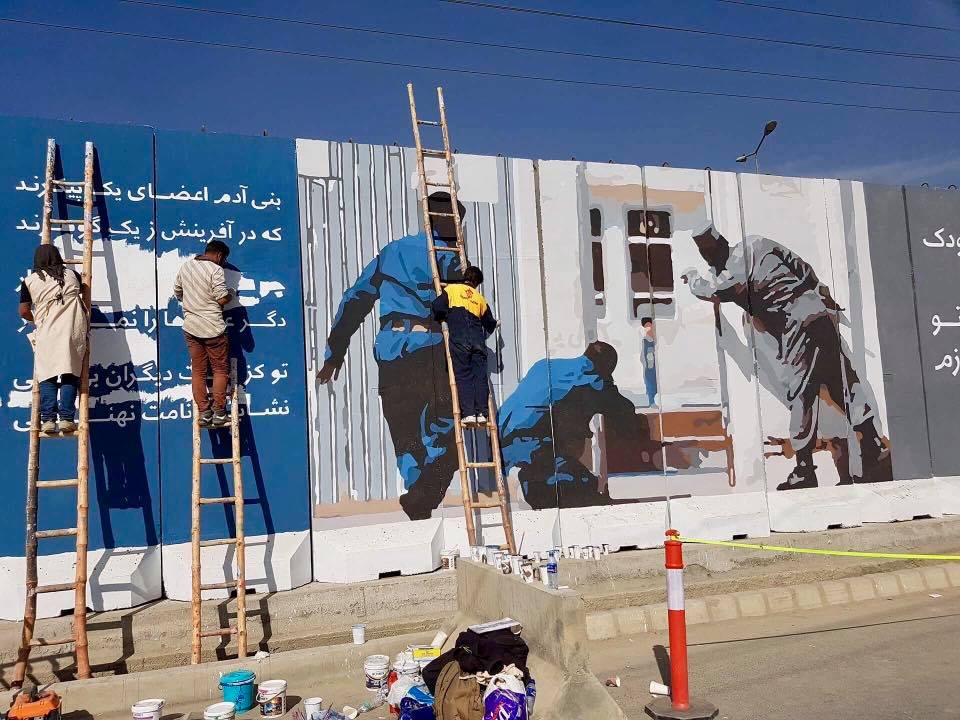
As a direct critique of the word warlord, a group that dominated Afghan politics frequently, ArtLords were born out of a sense of urgency to fight back against the very thing they represented - corruption and injustice. The movement is centered around using art as a tool for advocacy and social change. Through mural and graffiti art, ArtLords challenged the war-torn narrative at a time where many felt disillusioned and powerless. Their first mural appeared on blast walls in Kabul, built to protect government buildings, embassies and the elite from insurgent attacks. For most, the blast walls reflected fear and division, but ArtLords transformed them into powerful canvases. Since then, they have painted more than 2000 blast-wall murals in 19 of Afghanistan’s 34 provinces.
One of their most iconic works was the “I See You” mural, depicting a pair of eyes watching passersbys, painted on the walls of National Directorate of Intelligence. It depicts the eyes of 10-year-old Komal Singh, from the Afghan-Sikh community. Her innocent, but piercing eyes watching as a warning to corrupt leaders. This mural became a symbol of anti-corruption and has inspired a series of almost 200 similar murals painted in different cities across Afghanistan and the world.
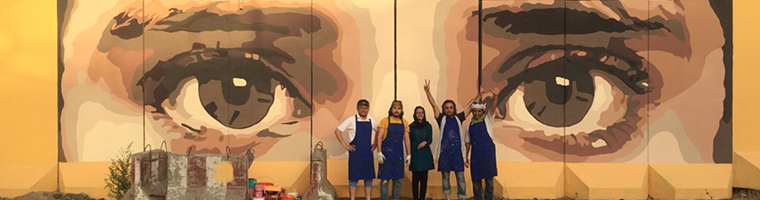
This series later became a global campaign, garnering many awards including the inaugural Sheikh Tamim bin Hamad Al Thani Anti-Corruption Innovation Award in 2016.
Unfortunately, the Taliban’s return to power in August 2021 forced many of Artlord’s members into exile. The new regime quickly painted over many of their murals, replacing color and commentary with monochrome propaganda. Yet, exile didn’t silence the movement. Today, Artlord continues its mission from abroad, working with diaspora communities and international partners to advocate for Afghan voices and preserve the memory of the country’s civic resistance.
Perhaps ArtLord’s most powerful impact was on civic life. Their murals provoked conversations about women’s participation in society, about government accountability, about peace and justice. In a country where protest could be dangerous, street art became a subtler, safer form of resistance. Local residents, including young people, began engaging in the painting process, offering suggestions, asking questions and in some cases joining in. The collective's presence in neighbourhoods fostered trust and encouraged dialogue between people and public institutions. ArtLords also inspired a new generation of Afghan artists and activists. Art workshops run by the group nurtured young talent, particularly among women and marginalised communities. These workshops weren’t just about painting, it was about claiming a voice.

Even after many members went into exile, the seeds they planted continued to grow. Emerging collectives and individuals have cited Artlords as their inspiration, and Afghan youth in the diaspora have begun using digital art and performance as a way to express themselves and build transnational solidarity.
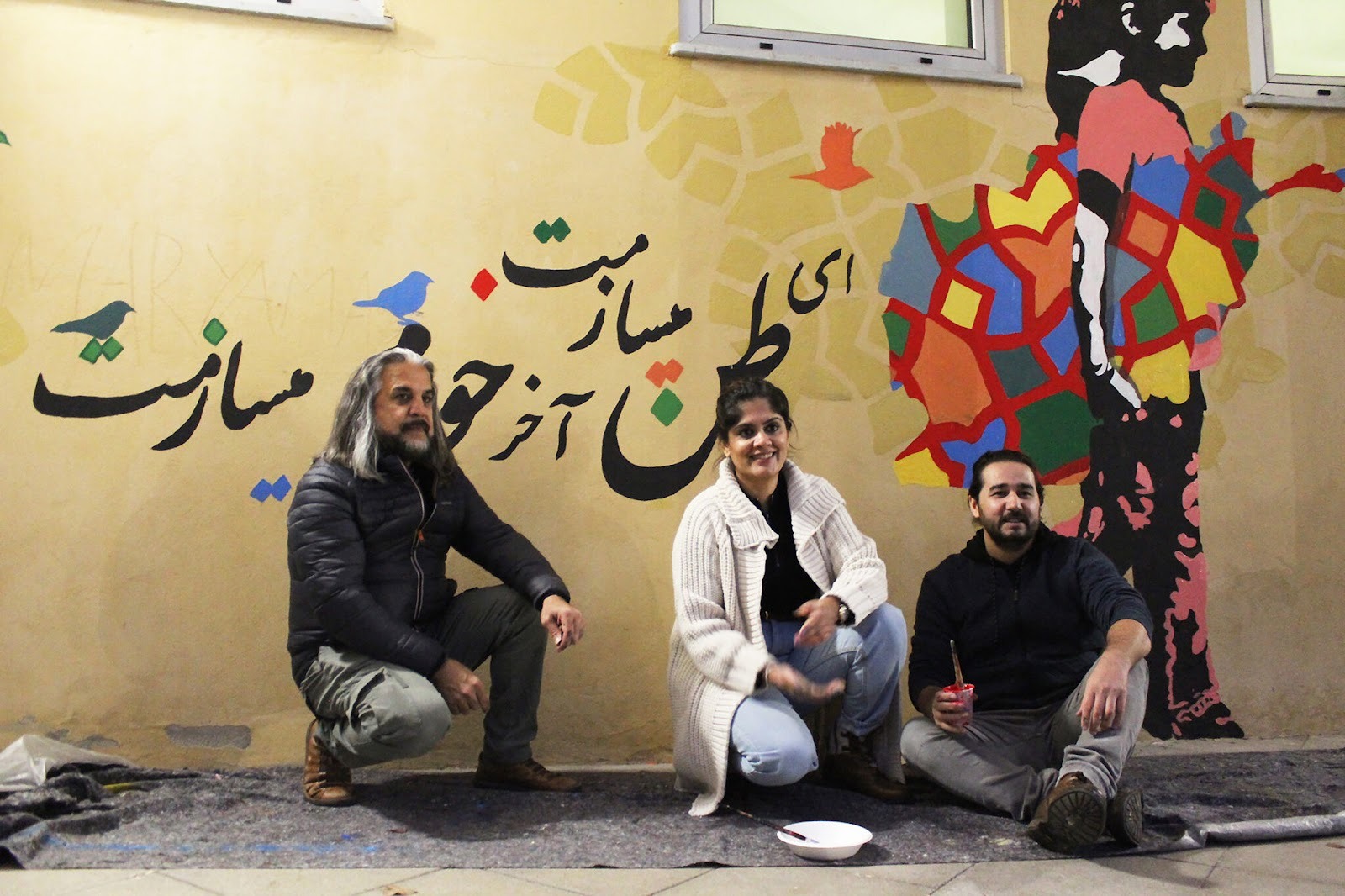
Artlords challenged this narrative by showing another side, one of civic engagement, creative resistance, and youth leadership. Their work became a visual counter-narrative, asserting that Afghans were not just victims of war but agents of change.